Whether you just woke from cryosleep or you are hunting a promotion in ranked PvP, these tips cover the fundamentals that separate a good squad from a great one.
First Steps: The First Week
Your first week in Lust Frontiers is about volume, not perfection. Complete the daily missions every day — they are short, they teach the mechanics, and they hand out the resources that fund your early upgrades. Do not hoard your early gear on a single unit; spread it across the squad so every lane has a credible defender.
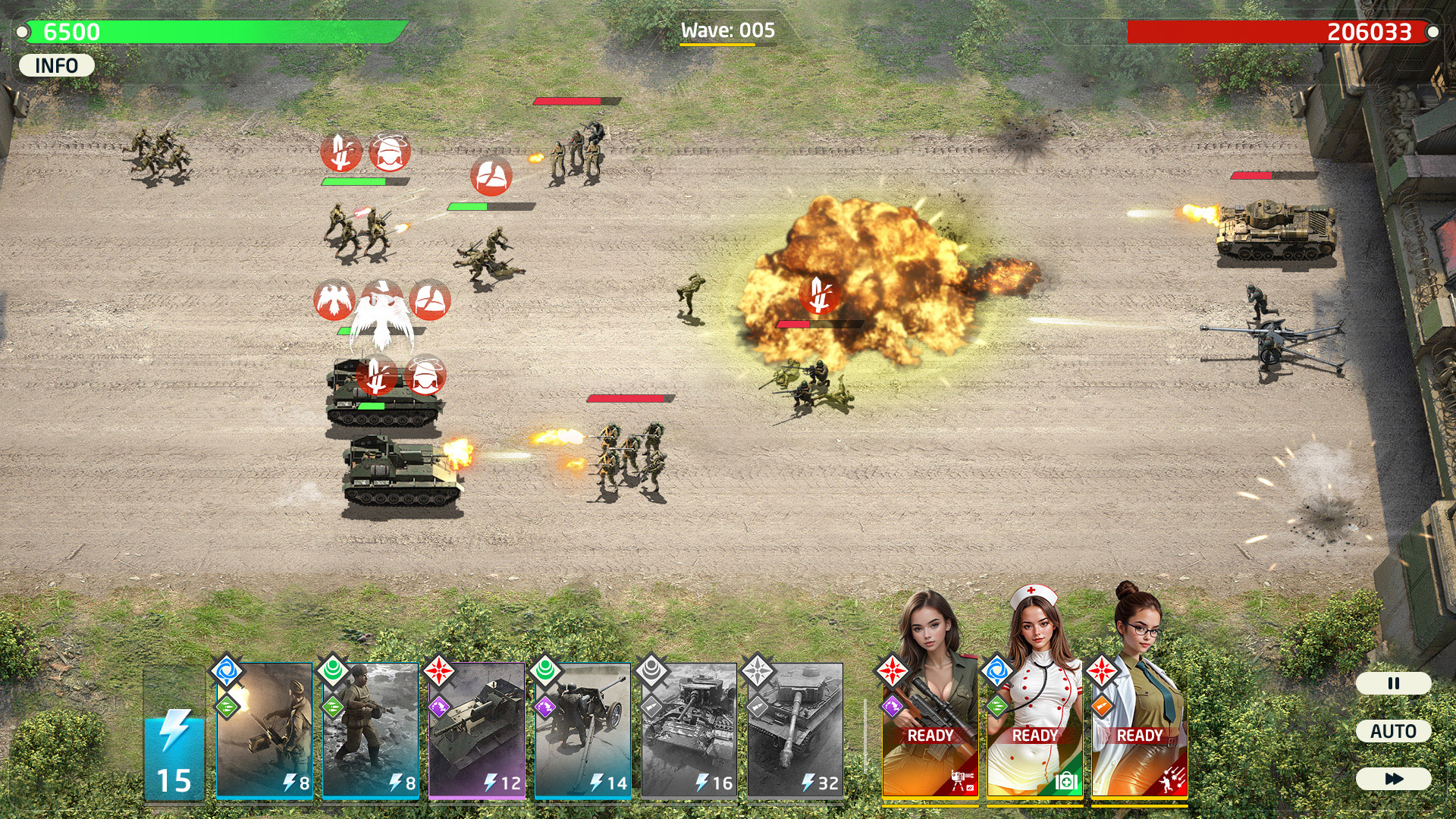
Pay attention to the daily battle too. It is the fastest source of repeatable rewards, and it is the best place to test new cards without risking your campaign progress. Keep your formation balanced: armor in front, infantry behind, and at least one support card in every deck you take into a serious mission.
A balanced formation: armor up front, damage behind, support in reserve
Deck Building Without the Headache
The golden rule of deck building here is synergy over star power. A rare card that fights alone loses to a common pair that covers each other's weaknesses. Start with two or three mercenaries you actually enjoy talking to, then build the deck around what they do well.
Keep your deck lean. A tight deck cycles faster, which means you see your key cards when you need them. Every card you add should answer the question: what does this do that my core pair cannot? If the answer is nothing, leave it in the collection.
Composition
Strengths
Weakness
Armor-heavy
Outlasts burst damage, holds lanes
Slow to finish fights
Striker-heavy
Ends battles fast
Falls apart if the burst is blocked
Support-heavy
Recovers from mistakes
Low damage ceiling
Balanced
Adapts to any matchup
No single dominant trick
Relationships as a Resource
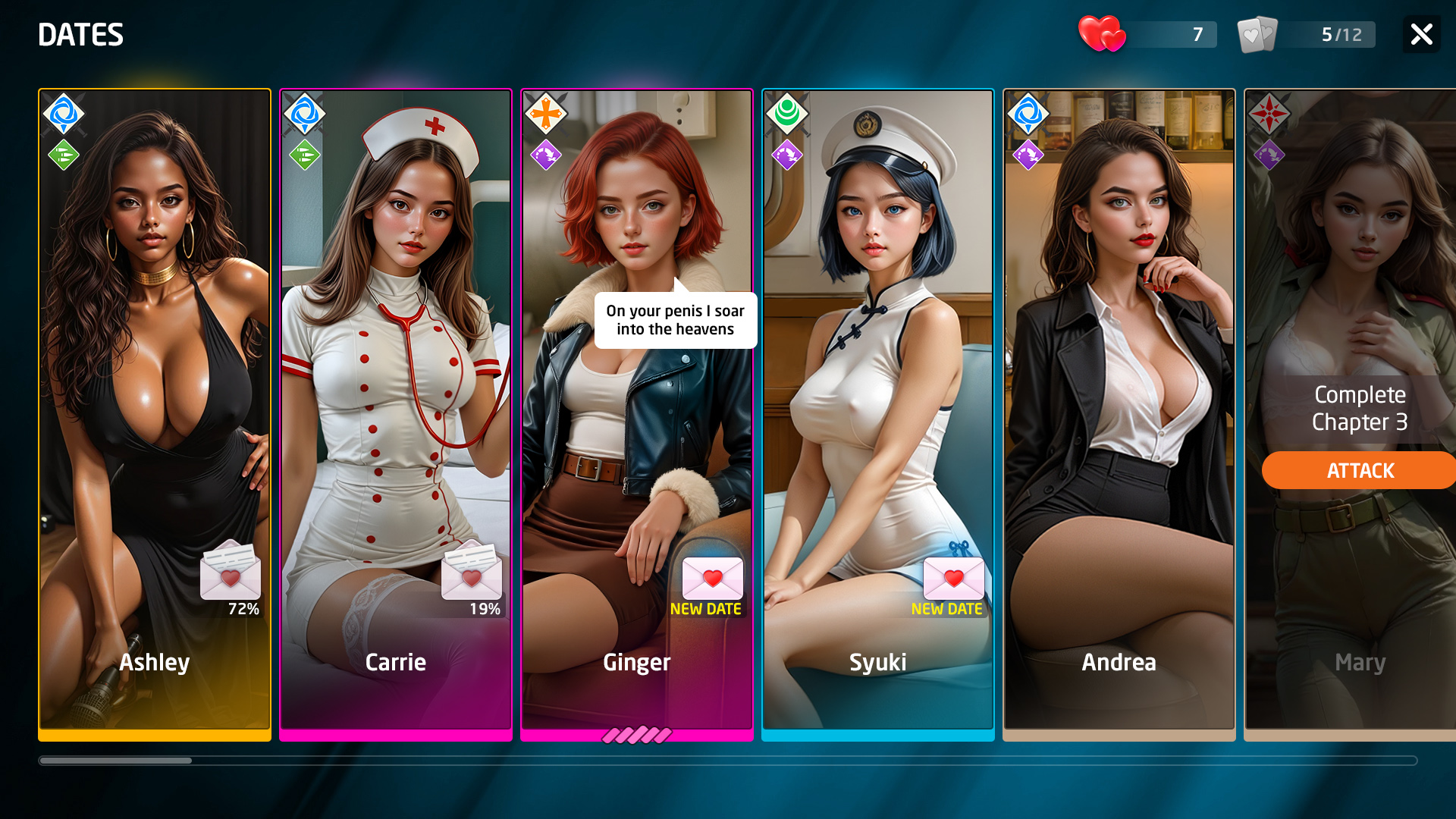
Gifts and dialogue are not a side activity; they are progression. A companion with a strong bond brings unique cards into your deck, fights harder, and unlocks exclusive scenes that also carry gameplay rewards. Treat relationship investment the way you treat gear: deliberately, and in line with your strategy.
If you are building a striker-heavy deck, invest in your striker's route first. If your squad runs on support, the medic's story pays double. The game rewards focused investment over spreading yourself thin across the whole roster.
Dialogue choices shape both the bond and the bonus it grants
Climbing the PvP Ladder
Ranked PvP rewards adaptation. Before you commit cards, read the enemy formation: if they stack armor, bring control cards; if they stack strikers, outlast them with support. Watch their habits across the first two turns — most captains have a tell.
Do not chase the leaderboard on day one. Use the ladder to learn matchups, then return to the campaign to farm the cards that fix your worst losses. A deck that covers its weaknesses beats a deck that maximizes its strengths.
Finally, remember the guild layer: guild battles add coordination to the competition, and a decent guild is the fastest source of advice, active teammates, and shared rewards. Find one whose schedule matches yours.
Read the lineup, counter the habit, turn the fight around
Common Mistakes to Avoid
The first mistake is over-investing in the first rare card you pull. Rarity is not the same as fit — a common card that synergizes with your squad beats a rare one that does not. The second is neglecting the daily loop: daily missions and battles are the steadiest income stream in the game, and skipping them for a week sets you back more than a lucky pull moves you forward.
The third mistake is ignoring the relationship system until late. By the time you notice the bonus stats and unique cards locked behind bonds, the campaign has moved on without them. Build the squad you want to fight with early, and the game's systems will pull in the same direction.
The last one: quit while you are tilted. The ladder punishes frustration. Take a breath, run a daily battle, come back with a clear head. Adaptation beats grinding, and patience beats panic — on the battlefield and off it.